
Book
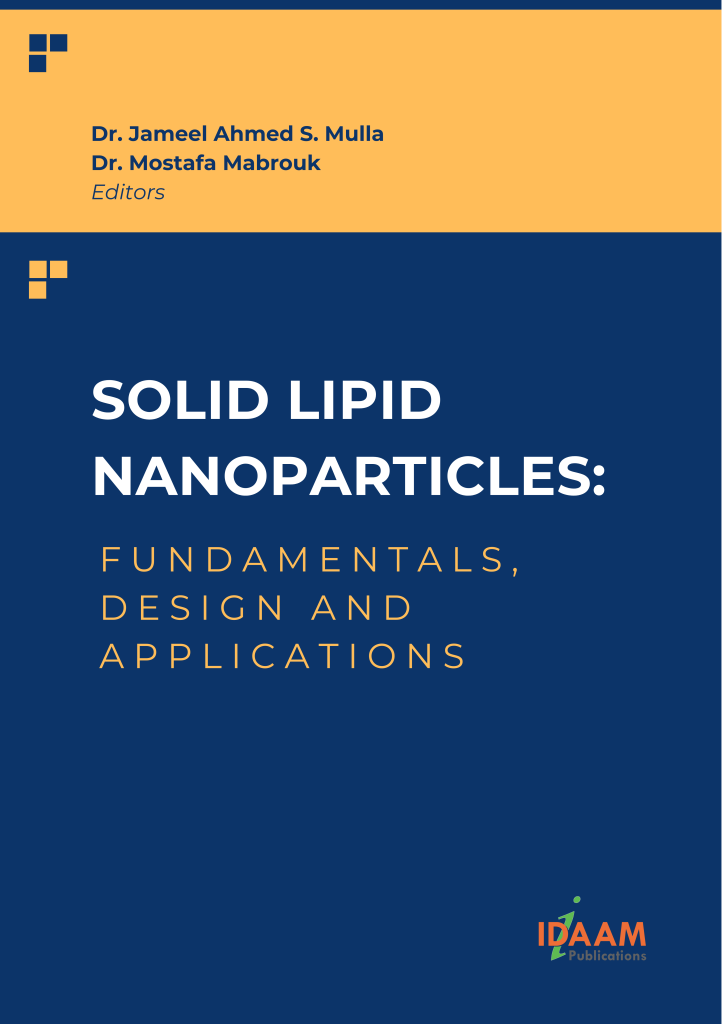
Solid Lipid Nanoparticles: Fundamentals, Design and Applications
Edited By: Dr. Jameel Ahmed S. Mulla & Dr. Mostafa Mabrouk
Published: 2026
Language: English
ISBN: 978-81-971590-3-9
About the book
The book offers a comprehensive and in-depth exploration of Solid Lipid Nanoparticles (SLNs), one of the most promising and versatile drug delivery systems in modern pharmaceutical science. Designed for students, researchers, and professionals working in nanotechnology, pharmaceutics, biomedical engineering, and related fields.This book serves as a critical resource for understanding the core principles, formulation strategies, and real-world applications of solid lipid nanoparticles.
Table of contents
Nupoor Sunil Erram, Nigar Kadar Mujawar, Jameel Ahmed S. Mulla
Pages 1-15
Abstract:
The field of nanotechnology is the science and process of producing materials with unique properties at the nanoscale. Technology that functions at a billionth of a meter scale is known as nanotechnology. According to their size, nanomaterials are divided into three categories: organic, inorganic, and green. There are several ways to synthesize nanomaterials, including top-down and down-up approaches, which incorporate a variety of synthesis techniques. The prepared nanoscale structure are evaluated employing several tools like dynamic light scattering, scanning electron microscope, transmission electron microscope, zeta potential etc. there are various other methods for evaluation of safety and efficacy of dosage forms like in-vitro methods and in-vivo methods. The National Institute for Occupational Safety and Health (NIOSH), the Organization for Economic Co-operation and Development (OECD), and the International Organization for Standardization (ISO) are essential organizations participating across the regulatory framework process. Solid lipid nanoparticles will be covered in detail in the next chapter, along with an overview, formulation considerations, evaluation criteria, and many other topics.
Keywords:
Nanotechnology, solid lipid nanoparticles, nanomaterials, regulatory aspects, ethical consideration, nanoscale, nanomaterial synthesis, medicine, drug delivery, nanocarriers.
Shailaja P. Desai, Ashwini S. Patil, Mahesh G. Saralaya
Pages 17-39
Abstract:
Solid Lipid Nanoparticles (SLNs) are advanced colloidal drug delivery systems composed of biocompatible and biodegradable lipids, which remain solid at both room and body temperatures. Developed in the early 1990s as an alternative to liposomes and polymeric nanoparticles, SLNs have gained considerable attention due to their potential to improve drug bioavailability, stability, and controlled release. SLNs typically consist of solid lipids (such as glyceryl behenate or stearic acid), emulsifiers (e.g., polysorbates, lecithins), and an aqueous phase. Drugs, particularly lipophilic ones, are incorporated into the solid lipid matrix, which provides protection against enzymatic degradation and environmental factors. Various production methods such as high-pressure homogenization, ultrasonication, microemulsion techniques, and solvent evaporation are used to prepare SLNs. These influence particle size, encapsulation efficiency, and release kinetics. SLNs demonstrate a favorable physicochemical profile, including small particle size (typically 50–1000 nm), high drug-loading potential, and controlled drug release mechanisms. Additionally, their use of Generally Recognized As Safe (GRAS) materials supports their biocompatibility. Applications span across pharmaceuticals, cosmetics, and nutraceuticals, including oral, topical, and parenteral drug delivery. However, limitations such as drug expulsion, polymorphic transitions, and relatively low drug loading have prompted the development of second-generation carriers like nanostructured lipid carriers (NLCs). SLNs represent a versatile platform with growing commercial and clinical interest. Future directions involve targeted delivery, stimuli-responsive formulations, and environmentally sustainable production techniques, positioning SLNs as a cornerstone in next-generation drug delivery technologies.
Keywords:
Solid lipid nanoparticles, methods of preparations, evaluations, applications.
K. Umasankar, T. S. Saraswathi
Pages 41-60
Abstract:
Solid Lipid Nanoparticles (SLNs) are characterized by various physicochemical properties that influence their behavior and effectiveness, particularly in drug delivery and other applications. Characteristics such as encapsulation efficiency, surface morphology, zeta potential, crystallinity, and particle size and dispersion are included in this list. Some parameters, such the lipid content and the techniques of manufacture, impact the stability and drug release profile of SLNs. Ideal SLN formulations to address therapeutic demands can only be achieved by a thorough comprehension of these characteristics. In terms of stability, bioavailability, and targeted medication administration, SLN size is a critical performance component. Morphology of SLNs is often studied using microscopy methods like Scanning Electron Microscopy (SEM) and Transmission Electron Microscopy (TEM). Importantly, zeta potential shows how charged the surface of SLNs is. A greater zeta potential is associated with better stability in SLNs because electrostatic repulsion between particles makes clumping less likely. A SLN’s crystallinity, or the organized organization of its lipids, may have a major impact on the drug release characteristics and physical stability of the nanoparticle. When testing for crystallinity in SLNs, one frequent method is differential scanning calorimetry (DSC). It is crucial that SLN formulations be stable in order to guarantee their effectiveness and safety during storage and use. Lipid composition, surfactant type, and environmental conditions (e.g., temperature, humidity) all affect SLN stability.
Keywords:
Solid Lipid Nanoparticles, Physiochemical Properties, Characterization of SLNs, Particle Size and Size Distribution, Surface Morphology, Zeta Potential and Crystallinity.
Lavanya Yaidikar, Prasanthi K, Lavanya Mandapati
Pages 61-93
Abstract:
Lipid-loaded drug delivery vehicles such as liposomes, lipid nanoparticles (LNPs) and emulsions hold great promise towards solving some of the problems related to drug solubility, stability, and targeted drug delivery since these delivery vehicles are lipid-based. Lipids preserve both water based and fat based drugs and their amphiphillic nature increases their bioavailabilities and can provide controlled or sustained release. Effective formulations of lipid-based formulations require the interaction of the drug and the lipid matrix to be compatible; compatibility affects the drug loading, the release kinetics, and stability, besides the bioavailability of the drug. This chapter examines how lipids may be used in drug delivery and in what criteria a lipid should be chosen, and how the lipid preparations may be adjusted to achieve a better therapeutic effect. Some of the considerations such as drug-lipid interactions, phase behavior, and drug biocompatibility among others are addressed to show the significance of using the appropriate lipid when necessary to produce intended therapeutic effects. Further, the approaches that could elevate lipid-drug compatibility like lipid modification and lipid mixing are also presented, as well as the use of the systems in the development of cancer treatment, gene, and vaccine delivery.
Keywords:
Lipid based drug delivery systems, liposomes, lipid nanoparticles, controlled release, drug targeting, biocompatibility.
Akshada Ashok Kolhe, Jameel Ahmed S. Mulla, Mukesh Vinod Kapse
Pages 95-112
Abstract:
Solid lipid nanoparticles (SLNs) have attracted intense interest as carriers capable of enhancing the solubility, stability, and bioavailability of a broad spectrum of bioactive. Production techniques fall into three broad families-physical, chemical, and biological (“green”)-each with distinct advantages, limitations, and scale up considerations. Physical methods use mechanical forces such as high-pressure homogenization, ultrasonication, and membrane contractors to reduce particle size and create stable dispersions. Chemical methods rely on solvent-based processes like solvent emulsification–evaporation, solvent diffusion, microemulsion formation, and solvent injection. Biological methods employ natural materials or bio-inspired processes, including enzyme-mediated lipid modification, biosurfactant-assisted formation, and fermentation-derived lipids. This chapter provides a systematic overview of the major methodologies, clarifies common sources of confusion, and highlights key process parameters that govern particle size, polydispersity, and long term stability.
Keywords:
Solid lipid nanoparticles, High‑Pressure Homogenisation, Ultrasonication, Solvent Emulsification–Evaporation, Solvent Diffusion (Emulsification–Diffusion), Solvent Injection (Nanoprecipitation).
K. Snekha, R. Susmitha, V. Sabitha, P. Gokulram, N. Selvasudha
Pages 113-137
Abstract:
Solid lipid nanoparticles (SLNs) have emerged as a promising nanocarrier system for drug delivery. Since they can encapsulate both hydrophobic and hydrophilic drugs and have the potential for controlled release. The main methods and variables used in the characterization of SLNs are thoroughly covered in this chapter. The significance of comprehending the physicochemical characteristics of SLNs, such as particle size, zeta potential, surface morphology, and crystalline structure, is covered at the outset. A number of analytical methods are thoroughly examined, including X-ray diffraction (XRD), differential scanning calorimetry (DSC), scanning and transmission electron microscopy (SEM/TEM), dynamic light scattering (DLS), and Fourier-transform infrared spectroscopy (FTIR). Methods for assessing drug encapsulation efficiency, in vitro release profiles, and stability under various storage conditions are also covered in this chapter. This chapter seeks to assist researchers in maximizing formulation and guaranteeing quality control in both academic and industrial contexts by providing insights into the approaches and difficulties in SLN characterization.
Keywords: Nanocarrier, Characterization, Particle size, Encapsulation efficiency, SEM.
Shivani Chandrakant Kavane, Poonam N. Chougule, Ganesh H. Wadkar
Pages 139-160
Abstract:
Oral drug administration continues to be the most commonly utilized route due to its non-invasive nature, ease of use, affordability, and strong patient adherence. However, this method is not without limitations, as the gastrointestinal (GI) tract presents numerous physiological and chemical barriers. Variables such as digestive enzymes, pH fluctuations, and poor membrane permeability can reduce drug absorption and compromise targeted delivery. To overcome these challenges, solid lipid-based nanoparticles (SLBNs) have emerged as promising solutions, offering advantages over traditional delivery vehicles like liposomes, emulsions, and polymer-based nanoparticles. Within this category, solid lipid nanoparticles (SLNs) and nanostructured lipid carriers (NLCs) have shown notable potential. Their success lies in their inherent properties, including excellent biocompatibility, biodegradability, ease of large-scale production, and flexible formulation design. Owing to their lipid matrix, these carriers are particularly effective for oral delivery, where they enhance drug solubility, stability, and facilitate sustained or controlled drug release. In the context of oral therapeutics, lipid-based nanoparticles are increasingly used to improve the gastrointestinal uptake of active compounds. Their ability to interact with the intestinal mucosa aids in absorption, while their nanoscale dimensions and surface properties contribute to prolonged GI retention and improved bioavailability. This chapter explores the development, functionality, and clinical relevance of SLNs for oral drug delivery, emphasizing their role in addressing conventional limitations and improving therapeutic outcomes.
Keywords: Solid lipid nanoparticle, oral drug delivery, biological barriers, pharmacokinetics, bioavailability.
Nigar Kadar Mujawar, Nupoor Sunil Erram, Jameel Ahmed S. Mulla
Pages 161-194
Abstract:
Solid lipid nanoparticles (SLN) are emerging as efficient as possible nanocarrierswith special physicochemical characteristics for topical, in addition to transdermal, medication delivery, biocompatibility, as well as being able to boost skin penetration. SLNs are made of solid lipids stabilised by surfactants and stay solid at both atmospheric and human body temperatures, giving controlled release of medications, improved drug stability, and protection of labile compounds. This chapter presents a comprehensive overview of the fundamentals, design principles, and therapeutic applications of SLNs in dermal drug delivery systems. This chapter begins with the basic principles and historical development of SLNs, discussing their composition, mechanisms of drug encapsulation, and comparison with other colloidal carriers like liposomes and nanostructured lipid carriers (NLCs). There is a thorough examination of important physicochemical properties, including stability, the loading of drugs, zeta potential, along with size of particles. Various formulation strategies and production methods, including high-pressure homogenization, microemulsion techniques, and solvent evaporation, are reviewed, alongside optimisation tools like Quality by Design (QbD). Topical applications of SLNs in dermatology and cosmetics highlight their benefits in treating conditions such as acne, psoriasis, and skin ageing, while transdermal applications focus on systemic delivery of drugs like Nonsteroidal Anti-Inflammatory Drugs (NSAIDs) and hormones. The review also discusses evaluation methodologies, regulatory challenges, and potential toxicity concerns. Recent innovations, including stimuli-responsive and microneedle-assisted SLNs, are highlighted to showcase future directions. Overall, SLNs represent a versatile platform for safe and effective dermal drug delivery, offering promising potential in both clinical and cosmetic fields.
Keywords: Biocompatibility, Controlled Drug Release, Dermatological Applications, Drug Encapsulation, Formulation Techniques, Microneedle Assisted Delivery, Physicochemical Properties, Skin Permeation Enhancement, Stimuli-Responsive Nanocarriers, Topical Drug Delivery, Transdermal Delivery.
G. Naveena, Valleti. Lakshmipriyanka, Y. Sarah Sujitha
Pages 195-234
Abstract:
A promising nanocarrier system for the delivery of therapeutic agents, particularly through the intravenous (IV) route, is solid lipid nanoparticles (SLNs). They are a desirable platform for targeted and regulated drug delivery because of their distinct physicochemical characteristics, biocompatibility, and capacity to improve drug solubility and bioavailability. In addition to discussing formulation strategies and assessing their performance in preclinical and clinical studies, this review highlights the benefits of SLNs in IV drug administration. Issues pertaining to their growth and prospects for the future are also discussed.
Keywords: Administration, Bioavailability, Biocompatibility, Clinical studies, Distribution, Intravenous, Lipophilic, Nanoparticles, Physicochemical, Solubility, Solid lipid nanoparticles.
Navyaja Kota, Jameel Ahmed S. Mulla, Pooja Vandan Pokar
Pages 235-259
Abstract:
Solid lipid nanoparticles (SLNs) have become a promising nanocarrier that can be used to deliver drugs in a non-invasive manner because of its biocompatibility, biodegradability, and the propensity to increase drug stability and bioavailability. Different modes of administration have different physiological barriers that tend to restrict effective delivery of the drug through the traditional dosage forms, including ocular, pulmonary, and nasal routes. The SLNs have immensely beneficial properties to address these hurdles, through enhancing drug absorption, increasing residence time at the site of action and being controlled or targeted to release drugs. This chapter gives an in depth review on the uses of solid lipid nanoparticles as carriers in administering drugs to the eye, lungs and nose. It explains the anatomical and physiological aspects of every route, formulation strategies, drug absorption mechanisms and treatment results obtained with the help of SLN-based systems. Also, recent research developments, safety issues, and regulatory outlooks are pointed out, as well as the contemporary challenges and opportunities.
Keywords: Solid lipid nanoparticles, SLNs, ocular drug delivery, pulmonary drug delivery, nasal drug delivery, non-invasive delivery, nanocarriers, controlled release, targeted drug delivery, pharmaceutical nanotechnology.
Vidya Umesh Patil, Smita V. Nhawkar, Rajanikant B. Ghotane
Pages 261-288
Abstract:
Solid lipid nanoparticles (SLNs) have shown great promise as drug delivery vehicles because of their capacity to encapsulate a variety of therapeutic agents, controlled release behavior, and biocompatibility. By facilitating site-specific delivery, increasing bioavailability, and lowering systemic toxicity, functionalization and targeting techniques have further expanded their potential. Recent developments in SLN surface modification, such as PEGylation, ligand conjugation, and bioinspired coating methods, are thoroughly reviewed in this chapter. Important targeting strategies are covered in detail, including active targeting with ligands like folic acid, transferrin, aptamers, and peptides and passive targeting through the enhanced permeability and retention (EPR) effect. The chapter also discusses stimuli-responsive systems, which enable precise and environment-specific drug release by responding to pH, redox conditions, or enzymatic activity.Functionalized SLN applications are being investigated in a number of therapeutic domains, such as gene delivery, microbial infections, cancer, and disorders of the central nervous system. Their function in improving intracellular uptake and overcoming biological barriers such as the blood-brain barrier is emphasized. Additionally emphasized are difficulties with drug loading, formulation stability, scale-up, and regulatory compliance. Future directions are outlined as transformative tactics, including theranostic SLNs, AI-assisted formulation design, modular platforms for combination therapy, and personalized nanomedicine. SLNs are in a position to be crucial in the creation of next-generation precision therapies by fusing cutting-edge functionalization methods with developments in biomedical science.
Keywords: Active targeting, Aptamers, Bioinspired coatings, Cancer therapy, Controlled release, Drug delivery, Functionalization, Gene delivery, Ligand conjugation, Modular SLNs, Nanomedicine, Passive targeting, PEGylation, Personalized medicine, Redox-responsive systems, SLNs, Stimuli-responsive delivery, Surface modification, Theranostics, Transferrin.
Surendra Agrawal, Pravina N. Gurjar, Deepak Khobragade
Pages 289-331
Abstract:
Solid Lipid Nanoparticles (SLNs) have emerged as an important nanocarrier technology in drug delivery, celebrated for their compatibility with biological systems, enhanced bioavailability, and ability to regulate drug release effectively. The journey of SLN formulations moving from the realm of laboratory prototypes to becoming commercially viable pharmaceutical medicines involves navigating a series of intricate challenges. The chapter provides a comprehensive exploration of the technological, manufacturing, and regulatory aspects that are vital for effectively scaling up and applying SLNs in an industrial context. Challenges in scaling up involve maintaining consistency across batches, safeguarding crucial quality attributes like particle size, zeta potential, and encapsulation efficiency, and adapting laboratory techniques to larger-scale processes such as high-pressure homogenization and spray drying. The importance of applying Design of Experiments (DoE) and Process Analytical Technology (PAT) is highlighted as essential for enhancing manufacturing parameters and ensuring product consistency. Furthermore, key aspects such as the choice of raw materials, the setup of equipment, the management of temperature and sterility, and the processes of quality testing are explored within the context of production that adheres to GMP standards. This chapter outlines the current regulatory framework set forth by authorities like the USFDA and EMA, emphasizing the importance of quality by design (QbD), risk assessment, and the need to adhere to ICH recommendations regarding stability, documentation, and safety evaluation. The absence of clear regulatory standards for nanomedicine necessitates a tailored, individualized approval process for each case. This chapter concludes by emphasizing future perspectives that reveal the importance of cohesive regulatory standards, the integration of AI-driven process controls, and the advancement of continuous production for SLNs. The insights shared serve as a valuable resource for formulation scientists, process engineers, and regulatory experts working within the nanopharmaceutical field.
Keywords: Solid Lipid Nanoparticles (SLNs), Scale-Up Techniques, Quality by Design (QbD), Regulatory Compliance
A. Kiran Kumar, Jameel Ahmed S. Mulla, Snehal Chakorkar
Pages 333-369
Abstract:
Development of Solid Lipid Nanoparticles (SLNs) presents a highly effective nanocarrier system in drug delivery, diagnostic, cosmetic, and nutraceutical applications because of its special properties, such as controlled release, high biocompatibility and scalability. Although they have some benefits and are widely accepted as safe, their growing commercialization and biological exposure elevates the importance of the overall assessment of their toxicological profiles. This chapter gives a detailed discussion of the forces affecting SLN safety such as lipid composition, type and concentration of surfactant, particle size, surface charge, crystallinity, and degradation products. The major pathways of SLN toxicity, including oxidative stress, membrane damage, inflammation, and mitochondrial dysfunction, are discussed in reference to the results in vitro and in vivo. The chapter also explains the biocompatibility tests, regulatory aspects, and standard test methods that would be important in the provision of safe biomedical translation. The existing issues, gaps in knowledge, and future opportunities to develop safer and next-generation SLN systems are also indicated.
Keywords: Solid lipid nanoparticles, nanotoxicology, biocompatibility, drug delivery systems, lipid-based nanocarriers, cytotoxicity, oxidative stress, surface properties, biodistribution, safety assessment, in vitro toxicity, in vivo toxicity, regulatory considerations, nanomedicine.
Anita Ashok Bandgar, Samrat Yashwant Ghatge, Akshay Ishwarchand Pawar
Pages 371-399
Abstract:
Solid lipid nanoparticles (SLNs) represent a transformative advancement in drug delivery systems, offering superior biocompatibility, stability, and controlled release compared to conventional methods. This chapter explores emerging trends in SLN technology, focusing on innovations that enhance precision, efficacy, and sustainability. Key developments include surface modifications (e.g., antibody conjugation, PEGylation)for targeted delivery, hybrid nanocarrier systems combining SLNs with liposomes or polymers for multifunctional therapy, and stimuli-responsive SLNs that release drugs in response to pH, temperature, or enzymes. SLNs are also revolutionizing gene and RNA delivery, building on mRNA vaccine success to enable CRISPR-based therapies and personalized medicine. The chapter highlights green formulation approaches, such as solvent-free production and natural lipids, which reduce environmental impact while improving therapeutic performance. Scalability challenges are addressed through advanced manufacturing techniques like high-pressure homogenization, paving the way for clinical and commercial translation. Applications span targeted cancer therapy (reducing systemic toxicity), CNS drug delivery (overcoming the blood-brain barrier), dermatology (enhanced skin penetration), and antimicrobial delivery (combating resistance). The integration of AI-driven design further enables personalized SLNs tailored to individual genetic and disease profiles. Collectively, these advancements position SLNs as a versatile platform for next-generation medicine, offering safer, more effective treatments across diverse therapeutic areas while aligning with global sustainability goals. Future directions include smart nanoparticles, closed-loop systems, and scalable production for widespread clinical adoption.
Keywords: AI-driven design, biocompatibility, blood-brain barrier, CRISPR, drug delivery, gene therapy, green formulation, hybrid nanocarriers, mRNA vaccines, nanotechnology, personalized medicine, scalability, solid lipid nanoparticles (SLNs), stimuli-responsive, sustainability, targeted therapy.
Editors

Dr. Jameel Ahmed S. Mulla
Dr. Jameel Ahmed S. Mulla received his Bachelor of Pharmacy (2003) and Master of Pharmacy in Pharmaceutics (2005) from Rajiv Gandhi University of Health Sciences, Karnataka, India. Dr. Mulla received his Ph.D. from Karnataka University, Dharwad (2013). He was an NRF Post-Doctoral Research Fellow at the University of the Witwatersrand, Johannesburg, South Africa (2014-15). Dr. Mulla is a Registered Expert, Nano Mission (Approved by Govt. of India), Department of Science & Technology, New Delhi, India. Dr. Mulla is a recognized PG & Ph.D. Guide to supervising research work at Shivaji University, Kolhapur, India. Dr. Mulla has more than 20 years of experience in teaching, research, and administration. He has published more than 115 research and review papers in national and international journals. He has presented 58 papers at National and International Conferences. He has published 5 Books and 2 Book Chapters. Dr. Mulla has filed/published 18 patents. Dr. Mulla is the recipient of many awards, such as the National Award for Excellence in Education (2019), the Senior Researcher Award (2019), the Global Teacher Award (2021), the National Multi-Talented Award (2022) and Best Professor Award (2023). Dr. Mulla secured 40th rank as a Scientist in the entire Shivaji University, Kolhapur (in all disciplines) as per AD Scientific Index 2025 - World Scientist and University Rankings.

Dr. Mostafa Mabrouk
Dr. Mostafa Mabrouk is a renowned professor of biomaterials at the National Research Centre in Egypt. He has achieved the remarkable distinction of being listed for two consecutive years (2024 and 2025) in the Stanford list of the World's Top 2% Scientists impact in their fields.Dr. Mabrouk holds two PhD degrees: the first in Chemistry from Rennes 1 University in France, and the second in Biophysics from Al-Azhar University in Cairo. He further enhanced his expertise as a postdoctoral scholar with the WADDP research group at the Medical School of the University of Witwatersrand in South Africa (2014-2016). In 2019, he was an academic visitor at Loughborough University, UK.His research focuses on biomaterials, nanomaterials, smart gels for biological applications, drug delivery systems, and innovative cancer treatments. Dr. Mabrouk has successfully mentored over 12 PhD and MSc students, and he has published more than 121 peer-reviewed journal articles, 5 book chapters, and an edited book, along with having 3 submitted patents in his area of expertise. Dr. Mabrouk has been actively involved in over 16 national and international research projects, serving as a principal investigator, co-principal investigator, or team member. He specializes in the development of polymer, inorganic, and polymer-inorganic composite carriers loaded with drugs for tissue engineering applications. Additionally, he has synthesized nanoporous particles and membranes for targeted drug delivery and has developed composite bioinks for 3D bioprinting and tissue engineering, as well as polymer composites aimed at skin regeneration. The primary objective of Dr. Mabrouk's research is to create cutting-edge biomaterial solutions that enhance patient outcomes and promote overall human health.